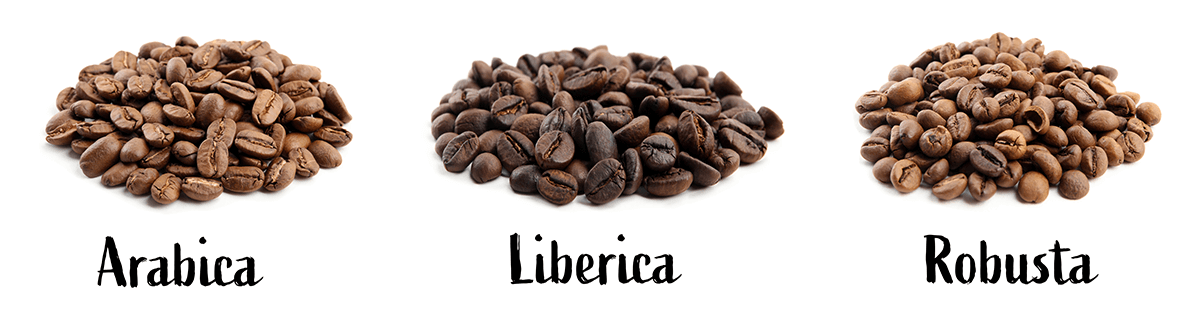
Liberica is a rare, climate-resilient coffee species whose flavor is being dramatically upgraded by anaerobic fermentation, honey processing, and better farm management — moving it from commodity obscurity toward specialty status.
What Is Liberica Coffee — and How Is Better Processing Changing Its Flavor and Quality?
Liberica coffee is Coffea liberica, a distinct species within the Coffea genus that originated in Liberia, West Africa, and today accounts for roughly 0.01% of global coffee production — a figure so small it is almost invisible on commodity charts, yet large enough to carry a growing community of producers, roasters, and researchers who believe it could matter a great deal more in a warming world.
For most of its commercial history, liberica was treated as a low-value filler — blended into instant coffee, left on tall trees until convenient, and processed without the care that arabica receives as a matter of course. That is changing. Producers in Malaysia, India, Indonesia, and the Philippines are now applying the same post-harvest discipline — selective picking, controlled fermentation, precise drying — that transformed fine robusta from a punchline into a specialty category. The results are rewriting what liberica can taste like, and the specialty industry is paying attention.
Before examining how processing is reshaping liberica's future, it helps to understand exactly where it sits relative to the two species that dominate every café menu on the planet.
| Attribute | Arabica (C. arabica) | Robusta (C. canephora) | Liberica (C. liberica) |
|---|---|---|---|
| Global market share | ~60% | ~40% | ~0.01% |
| Preferred elevation | 600–2,200 m | 0–800 m | 0–1,000 m |
| Climate tolerance | Cool, humid | Hot, humid | Hot, dry seasons tolerated |
| Cherry / bean size | Medium | Small–medium | Large (seed 9.5–18.3 mm long) |
| Parchment thickness | Thin | Medium | Thick (0.36–0.77 mm) |
| Sugar content | Moderate | Low | Highest of the three |
| Disease resistance | Low (leaf rust susceptible) | Moderate | High (leaf rust, nematodes) |
| Primary growing regions | Latin America, East Africa | Vietnam, Brazil, Uganda | Malaysia, Philippines, Indonesia, India |
| Flavor baseline | Floral, fruity, complex | Bitter, earthy, intense | Woody, smoky, jackfruit-like |
| Specialty potential | Well established | Emerging | Early stage, rapidly developing |
Sources: Perfect Daily Grind, Solid State Coffee, Bean & Bean Coffee
What exactly is liberica coffee, and where does it come from?
Liberica is a species of coffee plant — not a variety or cultivar of arabica or robusta, but a genetically distinct branch of the Coffea genus. First described scientifically in 1874, it is the third major coffee species to be formally documented, after arabica and before robusta (first described 1895). The species takes its name from Liberia, the West African nation where it was first collected.
Its physical profile sets it apart immediately. Liberica trees can reach heights of up to 15 meters, dwarfing arabica shrubs that typically top out at 3–5 meters when unmanaged. The leaves can exceed 30 cm in width, and the cherries are noticeably larger than those of any other commercially grown species, with seeds measuring 9.5 to 18.3 mm in length and 6.5 to 12 mm in width. The parchment surrounding those seeds is unusually thick, averaging 0.36 to 0.77 mm — historically a complication for processing, though it also protects the bean during drying.
The trees fruit roughly five years after planting, longer than arabica's typical three-to-four-year window, and require more space, with recommended plant spacing of 5×5 meters compared to 2×2 or 3×3 meters for arabica and robusta. The yield ratio is also challenging: it can take up to 10 kg of liberica cherries to produce 1 kg of green coffee, versus roughly 4 kg for arabica and 2.5 kg for robusta (Conillon). These economics historically pushed producers toward easier crops.
One important clarification: recent genetic research by Dr. Aaron Davis, Head of Coffee Research at the Royal Botanic Gardens, Kew, confirms that liberica and excelsa are distinct species — not sub-varieties of the same plant, as was previously believed. Until 2024, excelsa was classified as C. liberica var. dewevrei. The reclassification matters commercially because it opens separate research and breeding pathways for each species.
How did liberica go from global contender to near-forgotten crop?
Liberica's commercial history is a story of boom, bust, and very slow revival. Its first major moment came during the coffee leaf rust epidemic of the 1870s, when the fungal pathogen Hemileia vastatrix devastated arabica plantations across Southeast Asia. Liberica's stronger resistance to leaf rust made it an attractive replacement, and by the end of the 19th century it had rivaled arabica's position as the top coffee species in the global market.
That dominance collapsed after 1900. Low and inconsistent quality, a flavor profile that many consumers found strange or off-putting, and the logistical difficulty of harvesting from tall trees and processing thick-pulped cherries without the right infrastructure all contributed. Production fell dramatically, and liberica was largely relegated to local markets in Malaysia and the Philippines, where it remained culturally significant but commercially marginal.
Liberica now makes up over 90% of coffee produced in Malaysia and over 70% in the Philippines — not because it commands premium prices, but because it is what those countries have historically grown. The challenge now is converting that volume into value.
In India, the trajectory has been different. South India Coffee Company (SICC), founded in Karnataka in 2017 by Komal Sable and Akshay Dashrath, has documented how liberica was historically planted along farm boundaries as windbreaks or shade trees — a "sacrifice tree" or "Broca-hotel," as some regions still call it, because its high sugar content attracts the coffee borer beetle (broca) away from arabica. Cherries were harvested when convenient, processed without separation, and sold without accurate species identification. Most ended up blended into instant coffee.
"Historically, tree coffee in India was often planted along farm boundaries as windbreaks, shade components, or hardy secondary crops," says Komal Sable. "Trees were allowed to grow very tall, cherries were harvested when convenient, and the coffee was usually processed and sold without separation or accurate identification."
What does liberica actually taste like?
Liberica's flavor is shaped by its unusually high sugar content — the highest of any commercially grown coffee species — combined with a more porous bean structure that absorbs fruit sugars during processing more readily than arabica or robusta. The result is a flavor profile that is genuinely distinctive, though historically inconsistent.
At its worst — harvested overripe, processed carelessly, dried unevenly — liberica produces the woody, rubbery, smoky cup that earned it a poor reputation. At its best, it delivers something that surprises even experienced tasters.
Naturally processed liberica carries a jackfruit-like sweetness, a tropical fruit quality with no real equivalent in arabica. Fully washed lots, by contrast, lean toward a floral citrus profile — cleaner, brighter, and more reminiscent of a well-processed Ethiopian arabica than anything most people associate with the species. That divergence between two profiles, driven entirely by processing method, illustrates why post-harvest handling is so consequential for liberica specifically.
The high sugar content cuts both ways. It creates the potential for complex, sweet cups, but it also raises the risk of fermentation going wrong — producing acetic acid (vinegar notes) or other off-flavors if temperature and time are not carefully managed. Without controlled processing infrastructure, liberica's sugar content was a liability rather than an asset. That is precisely why the species suffered for so long.
One additional complication: liberica cherries stick to the tree once they ripen, which makes harvesting convenient in one sense — the cherries don't fall and get lost — but also creates a greater risk of overripe fruit if picking is not done selectively and on schedule.
How is processing transforming liberica's quality and market position?
Processing is the single biggest lever producers have for improving liberica's cup quality, and the techniques being applied are the same ones that elevated specialty arabica over the past two decades.
The foundation is simple but often overlooked in commodity production: picking at peak ripeness, careful sorting, and precise drying. These steps alone — consistently applied — can transform a mediocre liberica lot into something worth paying attention to.
Beyond the basics, producers are experimenting with several advanced methods.
Anaerobic fermentation is perhaps the most impactful technique being applied to liberica. Because the species contains more sugar than arabica, fermentation produces a more pronounced shift in flavor. A 120-hour anaerobic fermentation yields a bright acidity, while extending fermentation to between 360 and 720 hours pushes the cup toward winey, grape-like characteristics. Producers maintain a temperature of 25°C throughout to prevent acetic acid development. The thick parchment that historically made liberica difficult to process actually helps here — it provides a buffer during extended fermentation.
Honey processing — leaving varying amounts of fruit mucilage on the bean during drying — draws out sweetness and body without the full fermentation risk of natural processing. Some producers are applying yellow, red, and black honey classifications to liberica, mirroring the Costa Rican system developed for arabica.
Carbonic maceration, borrowed from winemaking, is also being explored. The technique involves fermenting whole cherries in a CO₂-saturated environment, which produces distinctive fruit-forward flavors and has become popular in the arabica specialty world.
Komal Sable of SICC frames the quality improvement as systemic rather than technique-specific: "Quality is improving, but primarily because the whole production system is improving. Better identification tells us what we are actually working with. Selective picking, lot separation, controlled processing, even drying, stable storage, and species-appropriate roasting then allow the coffee's inherent character to become visible."
The commercial logic is straightforward. Liberica has long been treated as a low-income crop, and producers who apply these methods well can reposition it as a premium product and increase their earnings substantially. The analogy to fine robusta is instructive: a decade ago, robusta was synonymous with cheap instant coffee; today, well-processed robusta from Vietnam and Uganda commands specialty prices and appears on competition menus.
Who is already producing high-quality liberica?
A small but growing group of producers is proving the model works.
My Liberica in Malaysia has been developing the species since 2011, with roughly 20 hectares planted in Kulai, Johor. Jason Liew and his team supply several international roasters, including Australia's ONA Coffee, which recognized the species' potential several years ago and continues to explore its range of flavor profiles. ONA is one of the most decorated specialty roasters in the Southern Hemisphere, and their engagement with liberica has been significant for the species' credibility with buyers who might otherwise dismiss it as a novelty.
96B Cafe & Roastery in Vietnam has spent almost a decade producing high-quality specialty liberica and excelsa, attracting international partnerships including with New York's Solid State Coffee.
South India Coffee Company in Karnataka is doing some of the most rigorous scientific work, collaborating with Kew Gardens on genetic identification and working to distinguish liberica from excelsa and libex (the interspecies hybrid) in the Indian tree coffee population. Their fieldwork across Coorg and Hassan suggests that the Indian tree-coffee population is predominantly excelsa, with both pure excelsa and excelsa-dominant libex present — a finding that has significant implications for how Indian "liberica" is marketed and processed.
Institutional recognition within the specialty industry is also growing. The Global Coffee Awards now include a category dedicated to liberica, and the first Liberica International Roasting Competition took place in 2019, attracting 22 competitors. Baristas have used liberica at the World Barista Championship, sometimes blended with Gesha, and Malaysian Barista Champion Jason Loo recently hosted a liberica omakase — a curated tasting experience that treats the species with the same reverence as a fine wine flight.
Why does liberica matter for climate resilience?
Climate resilience is the strongest argument for liberica beyond its cup quality, and it is the reason researchers, governments, and development organizations are paying attention alongside roasters.
Arabica is highly sensitive to temperature. Studies project that climate change could reduce suitable arabica-growing land by 50% or more by 2050 in key producing regions. Robusta is more tolerant of heat but still requires consistent rainfall and relatively stable conditions. Liberica, by contrast, tolerates longer dry seasons, lower elevations, and warmer climates than arabica — precisely the conditions that climate change is creating across tropical growing regions.
Research by Dr. Aaron Davis and colleagues points to West Africa — liberica's original home — as a region where producers may eventually earn significantly more from the species as climate pressures intensify and arabica becomes increasingly difficult to grow at lower elevations. The species' resistance to nematodes and coffee leaf rust adds further resilience value.
Liberica is also an ideal rootstock for grafting weaker species. In Mexico, Maragogype arabica varieties were grafted onto liberica rootstock as early as the late 19th century to improve yields and nematode resistance — a practice that could be revisited as arabica farmers seek hardier root systems without abandoning their preferred cultivars.
What is libex, and why might it matter more than liberica itself?
Libex is an interspecies hybrid of liberica and excelsa, recently genetically identified by Aaron Davis and his team at Kew Gardens. Found by the SICC Labs team on trees planted in 1980, libex carries intermediate characteristics between its two parent species — and those intermediate characteristics may make it more commercially viable than either parent alone.
"It could combine liberica's lowland heat tolerance and disease resistance with excelsa's productivity, thinner parchment, better outturn, and wider climate flexibility," says Komal Sable. Excelsa's thinner parchment and softer pulp make it significantly easier to process than liberica, which has historically been a major barrier to quality production. A hybrid that retains liberica's climate hardiness while inheriting excelsa's processing efficiency would address two of the biggest obstacles simultaneously.
Libex plants are fertile, and promising material already exists in cultivation. Selected trees can be multiplied through cuttings or grafting without waiting for an entirely new breeding programme — a significant advantage given how long coffee breeding typically takes. This means libex may reach producers at scale within years rather than decades.
The SICC fieldwork finding that much of India's "tree coffee" population is actually excelsa-dominant libex rather than pure liberica has practical implications for processing. Libex lots may respond differently to fermentation and drying than pure liberica, and producers who understand what they are actually working with — thanks to genetic identification — can tailor their processing accordingly.
What are the biggest barriers to liberica's growth?
High-quality liberica is still in its early stages, and the data to support confident claims about its commercial trajectory is thin. Several structural challenges remain.
Supply is small and inconsistent. "Planting material remains heterogeneous, supply is limited, and quality varies substantially," says Komal Sable. "We are at the beginning of moving from scattered legacy trees to selected, managed specialty production." Roasters who want to build a liberica program face the same challenge that early specialty robusta buyers faced: finding enough consistent volume to justify the sourcing infrastructure.
Identification is still unreliable. Without genetic testing, it is difficult to know whether a given lot is pure liberica, excelsa, libex, or some other combination. This matters for processing decisions, roast profiling, and marketing. The SICC-Kew collaboration is helping, but genetic identification is not yet standard practice across producing regions.
Processing infrastructure is underdeveloped. The thick parchment and high pulp content of liberica cherries require more water, more time, and more careful temperature management than arabica. In regions where liberica has historically been a secondary crop, the infrastructure for controlled processing often does not exist.
Roasting knowledge is limited. Species-appropriate roasting for liberica is still being developed. The bean's density, moisture content, and sugar levels differ from arabica in ways that affect roast curve design, and roasters who apply arabica profiles to liberica often produce suboptimal results.
Consumer awareness is minimal. Outside of Malaysia and the Philippines, most coffee drinkers have never heard of liberica. Building consumer understanding and willingness to pay a premium requires education and storytelling — investments that take time and money.
None of these barriers are insurmountable, and the trajectory is clearly positive. But anyone expecting liberica to become a mainstream specialty category within the next few years is likely to be disappointed. The more realistic horizon is a decade of steady, incremental development — similar to what fine robusta has experienced since the early 2010s.
How should you brew liberica if you find it?
Brewing liberica well starts with understanding that its higher sugar content and bean density mean it behaves differently from arabica under heat. A few practical considerations:
Grind size matters more than usual. Liberica beans are denser and larger, and inconsistent grinding produces uneven extraction that amplifies the species' less pleasant characteristics. A quality burr grinder with consistent particle distribution is worth the investment.
Water temperature can be slightly lower than for arabica — around 90–92°C rather than 93–96°C — to avoid over-extracting the sugars and producing a cloying, syrupy cup.
For naturally processed liberica, pour-over methods that allow the coffee's fruit character to express itself cleanly tend to work well. For washed liberica, espresso or AeroPress can highlight the floral citrus notes without the muddiness that sometimes appears in immersion brewing.
Roast level is a significant variable. Medium roasts tend to preserve the species-specific flavor characteristics best; dark roasts can push liberica into the generic bitterness that gave it a poor reputation in the first place.
If you are interested in exploring liberica alongside other specialty beverages, brewedwellness.com covers a range of functional and flavorful brewed drinks — from caffeine-free herbal teas for sleep to digestive herbal blends — that pair well with the kind of mindful brewing approach that liberica rewards.
Where is liberica headed?
The momentum behind liberica is real, even if the scale remains small. Producers in Malaysia, India, Indonesia, and the Philippines are investing in quality. Researchers at Kew Gardens are providing the genetic foundation for better identification and breeding. Roasters at ONA and elsewhere are demonstrating what the species can taste like when handled with care. Competitions are creating platforms for liberica to be evaluated on its merits.
The libex hybrid may prove to be the most commercially significant development of all — a plant that combines liberica's climate resilience with excelsa's processing efficiency, already existing in cultivation, already fertile, already being studied by some of the best coffee scientists in the world.
Neither liberica nor libex will displace arabica or robusta in the near term. But for producers in climate-threatened lowland regions who need a crop that can survive hotter, drier conditions while still producing something worth drinking, liberica and its relatives offer a path that was not visible a decade ago.
The species is moving from an overlooked commodity to a credible specialty product. That transition is being driven by processing, by science, and by a small community of producers and roasters who saw potential where others saw a problem. Whether liberica becomes a genuine specialty category or remains a niche curiosity will depend on whether that community can solve the supply, consistency, and infrastructure challenges that still stand in the way.
Sources
- Why processing is helping push liberica into the spotlight - Perfect Daily Grind
- Liberica & Excelsa | The Future of Coffee? - Solid State Coffee
- Liberica - the forgotten kind - Coffee Consulate
- What are Liberica Coffee Beans? - Bean & Bean Coffee
- The Liberica Story - ONA Coffee
- Libex Species Page - South India Coffee Company
- Aaron Davis et al. — Coffea liberica taxonomy, Nature Plants
- Liberica seed morphology study - Scientific Reports
- World's First Liberica Roasting Competition - Earthlings Coffee
- Global Coffee Awards Categories