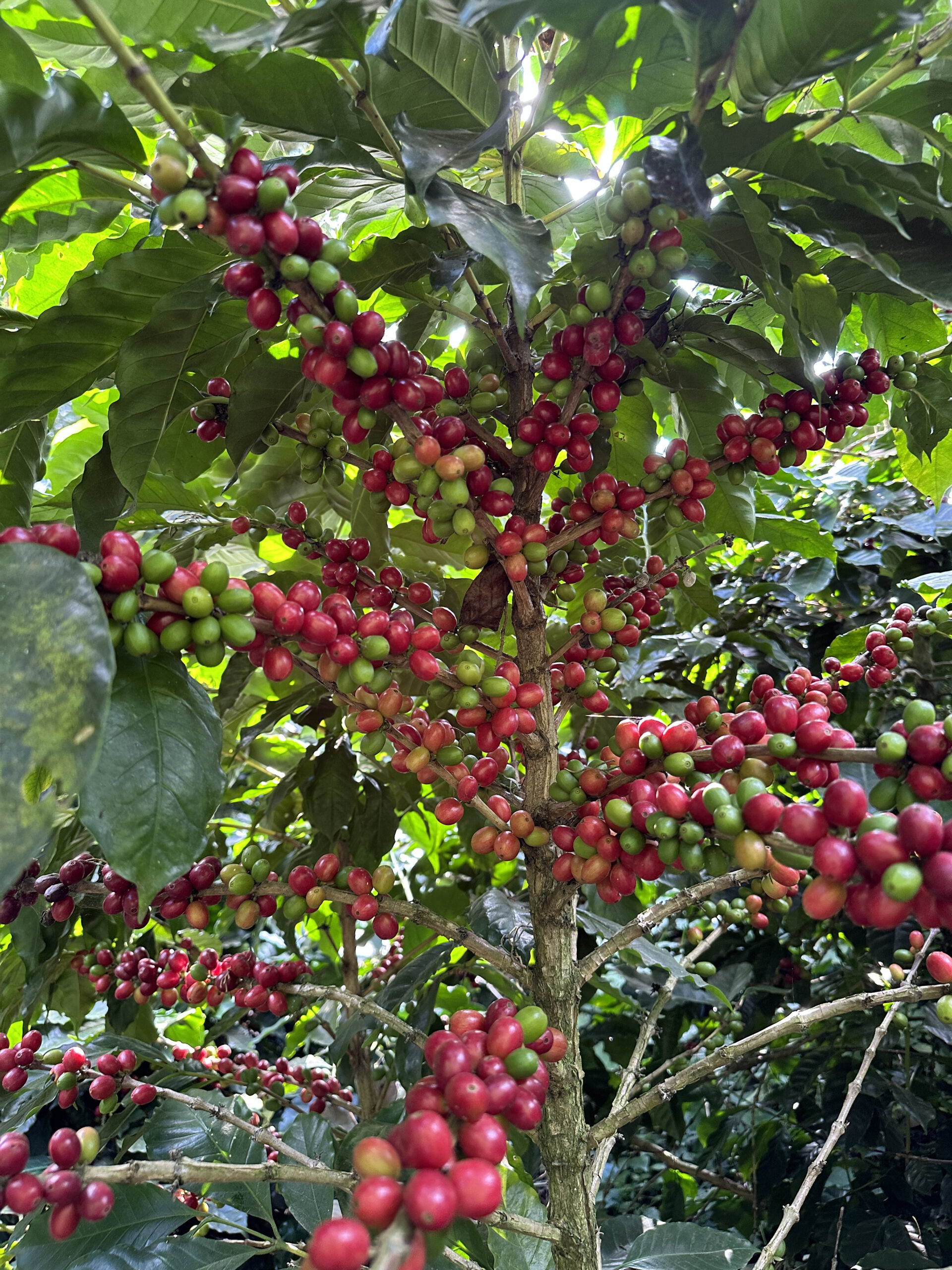
Kenya's Coffee Flavor Map will blind-cup ~500 samples across 34 counties and publish a free sensory atlas in 2027, giving buyers and roasters the most granular terroir reference the country has ever produced.
What Kenya's National Coffee Flavour Atlas Means for the Taste, Terroir and Traceability of What You're Buying
Kenya's National Coffee Flavour Atlas — formally called the Kenya Coffee Flavor Map initiative — is a systematic, government-backed sensory database that will evaluate approximately 500 coffee samples drawn from all 34 of Kenya's coffee-growing counties. Each sample will be blind-cupped and linked to geographic, environmental and production data. The completed atlas is scheduled for free public release in 2027.
For anyone who buys, roasts or simply drinks Kenyan coffee, that single sentence carries a lot of consequence. This is not a marketing exercise. It is a structured research programme backed by the Coffee Board of Kenya, the Food and Agriculture Organization of the United Nations (FAO), the Kenya Coffee Platform, the United Nations Industrial Development Organization (UNIDO) and the Government of Kenya itself. The scale — 34 counties, 500 samples, multiple blind cuppers per coffee — is unprecedented for a single origin.
Before unpacking what this means county by county and cup by cup, here is a snapshot of how the initiative compares to the existing tools buyers and roasters use to understand Kenyan coffee:
| Reference tool | Geographic scope | Sensory method | Data freely available? | Publication / update |
|---|---|---|---|---|
| Kenya Coffee Flavor Map (2027) | All 34 coffee-growing counties | Blind multi-cupper evaluation, linked to farm/co-op data | Yes — stated as freely available to industry | Atlas due 2027; expo Nov 2026 |
| World Coffee Research Kenya profile | National overview; variety-level data | Research trials, not consumer sensory | Yes | Ongoing updates |
| Atlas Coffee Importers Kenya page | Selected counties (Nyeri, Murang'a, Embu) | Importer tasting notes per lot | Partial — lot notes public | Per-harvest |
| Coffee ad Astra varietal analysis | Varietal-level (SL28, SL34, etc.) | Aggregated tasting notes from ~1,500 bags | Yes — blog post | Static (2019) |
| Kenya Coffee School "Make it Kenya" framework | National branding | Qualitative origin storytelling | Yes | Ongoing |
The table makes the gap obvious: no existing resource combines the geographic breadth, the blind sensory rigour and the free accessibility that the Flavor Map promises.
Why does Kenya need a flavour atlas now?
Kenya has produced world-class arabica since the late nineteenth century. Coffee was introduced to Kenya in 1893 by Scottish missionary John Paterson, with seeds reportedly sourced from the Yemeni port city of Aden via the British East India Company. The first harvest came in 1896, and by 1912 large estates around the Kiambu-Kikuyu district were growing Kent and Bourbon varieties. By independence in 1963, Kenya had already earned a global reputation for quality.
That reputation has always rested on a narrow set of signifiers: the AA screen size, the SL28 and SL34 varieties, and a handful of counties — Nyeri, Murang'a, Kirinyaga — whose names appear on specialty roasters' bags worldwide. The problem is that Kenya grows coffee across 34 counties, and the country's coffee sector supports an estimated 800,000 smallholders, the vast majority of whom farm outside the best-known postcodes. Their coffees enter the auction system, get blended into undifferentiated lots, and lose any terroir story they might have told.
Kenya's domestic coffee culture is also expanding rapidly. The number of coffee shops in the country rose from 231 in 2019 to 791 in 2023, per Kenya's Agriculture and Food Authority — a more than threefold increase in four years. A domestic market that sophisticated needs a vocabulary for talking about regional differences, and that vocabulary does not yet exist in systematic form.
The Flavor Map initiative is designed to fill both gaps simultaneously: giving international buyers a richer reference and giving Kenyan producers, educators and consumers a shared sensory language rooted in their own geography.
What exactly will the atlas contain?
The Kenya Coffee Flavor Map is defined as a full sensory database capturing regional flavour profiles, visual maps and a searchable sensory database, with each coffee evaluated blind by multiple cuppers and tasting notes connected to geographic, environmental and production data collected from participating farms and co-operatives.
In practical terms, the atlas will include:
- Flavour profiles mapped to specific counties and micro-regions
- Sensory attributes cross-referenced with variety, altitude, soil type and processing method
- Visual cartographic maps showing where particular flavour clusters occur
- A searchable database accessible to producers, exporters, buyers, roasters and educators
Torch Coffee co-founder Marty Pollack, one of the initiative's organisers, describes the collaboration model clearly: "Kenyan professionals are the hosts. International cuppers bring their own experience and have a chance to learn from the people who know these coffees at source. That is how new relationships start." The blind evaluation format is important — it removes the halo effect that famous county names can create, forcing the sensory data to stand on its own.
The project's technical partner in Kenya will support the evaluation and data framework, though the specific organisation had not been publicly named at the time of writing.
How does this change what buyers and roasters know about Kenyan terroir?
Terroir, in coffee, is the combined influence of geography, climate, soil and farming practice on the sensory character of a finished cup. Kenya's terroir story has historically been told through a small number of well-documented variables: altitude (most Kenyan specialty coffee grows between 1,400 and 2,100 metres above sea level), volcanic red soils, and the double-washing process that gives classic Kenyan lots their clean, bright acidity.
What the atlas adds is granularity. World Coffee Research notes that Kenya has historically produced some of the highest quality arabica coffees in the world, prized for their acidity, intensity and complexity of flavour, but also that disease pressure has pushed farmers toward Batian and Ruiru 11 varieties — an estimated 300,000 families had replanted with these newer varieties as of 2019. The sensory implications of that varietal shift are not yet well documented at scale. By linking tasting notes to variety data, the Flavor Map will begin to answer whether Batian and Ruiru 11 cups taste meaningfully different from SL28 and SL34 — and whether that difference varies by county.
The varietal question matters because SL28 is already well understood to carry distinctive sensory signatures. Analysis of aggregated tasting notes from approximately 1,500 coffee bags found that SL28 is strongly associated with blackberry and black currant descriptors, a profile that has made Kenyan coffee famous in specialty circles. But that analysis was static, drawn from a 2019 dataset, and did not map those descriptors geographically. The Flavor Map will do exactly that — with fresh samples evaluated under controlled conditions.
For roasters, the practical implication is significant. A searchable sensory database tied to county and variety means sourcing decisions can be made with much more precision. Instead of buying "a Nyeri" because Nyeri is known for bright acidity, a roaster could search for lots from a specific county with documented stone-fruit character at a particular altitude range, then verify that profile against the atlas before committing to a purchase.
What is the Kenya Coffee Flavor & Origin Expo, and why does it matter?
The atlas project will form the centrepiece of the Kenya Coffee Flavor & Origin Expo, taking place from 14 to 16 November in Nairobi. Professional cupping sessions are scheduled for 15 and 16 November, with exhibitions, educational sessions and networking opportunities running across all three days.
Alongside the expo, the Kenya Coffee Origin Conference will bring together academics, scientists, producers, baristas, roasters and policymakers to discuss issues affecting the coffee value chain. Topics are expected to include regional coffee identities, regenerative agriculture, women in coffee, producer-focused competition models and international marketing opportunities.
FAO Kenya will also present findings from the Kenya Arabica Climate and Soil Suitability Mapping Initiative at the conference — a parallel project examining how climate and soil conditions may influence future coffee production and investment decisions. That presentation is worth watching closely: climate modelling for arabica suitability is increasingly consequential as growing zones shift, and Kenya's high-altitude regions are not immune to temperature stress.
The expo is, in effect, the public launch of a multi-year research process. The cupping sessions in November will contribute data toward the 2027 atlas, and the conference will begin to build the interpretive community — producers, researchers and buyers — who will use the atlas once it is published.
How does the traceability system work, and what does it mean for the coffee you buy?
Traceability in Kenyan coffee means the ability to connect a finished roasted product back to the specific farm, cooperative or washing station where the coffee cherries were processed, along with the environmental and production conditions at that origin.
Kenya's auction system has historically worked against this. The vast bulk of Kenya's coffee is sold through an auction system under the auspices of the Kenya Coffee Board, with private marketing services and exporters buying top-quality lots after cupping samples. That system is efficient for price discovery but tends to aggregate coffees from multiple farms into single lots, obscuring individual farm identity.
Traceable Kenyan coffees are available from privately owned estates or cooperatively managed washing stations — called "Factories" in Kenya — organised into Farmer Cooperative Societies. Only relatively recently have exporters been able to market coffees from individual washing stations directly to buyers, a development that has enabled importers like Atlas Coffee to build relationships with specific societies in Nyeri and Murang'a counties.
The Flavor Map initiative reinforces this traceability push by requiring participating farms and co-operatives to supply geographic, environmental and production data alongside their coffee samples. That data becomes part of the sensory record, meaning that when a buyer consults the atlas, they are not just seeing a flavour profile — they are seeing a flavour profile tied to a specific set of conditions that can be verified and replicated.
The Kenya Coffee School's "Make it Kenya" concept frames this traceability imperative in branding terms: through digital traceability systems such as ARABIKA (Action to Relaunch Agriculture and Branding Internationalization of Kenyan Coffee), the concept promotes farm-level traceability, cooperative transparency, supply chain verification and digital farm records. The Flavor Map gives that branding framework a scientific backbone — a publicly available sensory database that makes origin claims verifiable rather than merely asserted.
What do the existing flavour profiles of Kenyan coffee tell us, and how might the atlas expand them?
Kenya's best-known flavour descriptors — blackcurrant, blackberry, grapefruit, tomato, dark cherry, bright citric acidity — are associated primarily with the SL28 and SL34 varieties grown in the central highlands. Atlas Coffee Importers describes the diversity of Kenya coffee profiles as "part of the origin's charm," noting that fruit notes range from citrus (grapefruit, mandarin orange) to stone fruit (peach, apricot) to dark berry (blackberry, blackcurrant) and everything in between.
That diversity exists, but it is currently documented anecdotally — through individual importer tasting notes and roaster bag copy rather than systematic research. The Flavor Map will test whether those descriptors cluster geographically: whether coffees from the drier eastern counties consistently show different acidity profiles from those grown in the wetter central highlands, or whether altitude above 1,800 metres reliably correlates with floral rather than fruit-forward character.
There is also the processing variable. Kenya's washed process is famous, but natural and honey-processed Kenyan coffees are increasingly available. Research into how processing affects taste found that washed processing tends to express varietal characteristics most clearly, while natural processing introduces fermentation-derived flavours that can mask or transform the underlying terroir signal. The Flavor Map's design — linking sensory attributes to production practices — means it will generate data on processed-lot profiles as well, giving buyers a basis for comparing washed and natural lots from the same county rather than relying on generalisation.
The atlas will also capture data on newer varieties. World Coffee Research has been collaborating with Kenya's Coffee Research Institute (part of KALRO) since 2014, working on breeding programmes including the Innovea Global Arabica Breeding Network and an International Multilocation Variety Trial. Kenya's formal coffee research history stretches back to 1908, and the famed SL28, SL14 and SL34 varieties were developed in the early 1900s. The sensory profiles of Batian and Ruiru 11 — the disease-resistant varieties now planted by hundreds of thousands of families — are not yet documented at the same depth as the SL series. The Flavor Map's 500-sample scope is large enough to include meaningful representation of these newer varieties.
What should buyers and roasters do before the atlas publishes in 2027?
The atlas is two years away. In the interim, the most useful thing buyers and roasters can do is engage with the existing traceability infrastructure and pay attention to the data that emerges from the November 2026 expo.
For sourcing, prioritise lots that already carry county-level or washing-station-level identification rather than generic "Kenya AA" designations. The AA grade refers to screen size — beans with screen sizes 17 and 18 — not to flavour or origin. There is no absolute correlation between bean size and cup quality, which is why many specialty importers source AB and peaberry (PB) grade lots. A traceable AB from a documented washing station in Kirinyaga is a more informative purchase than an untraced AA.
Roasters who want to engage with the Flavor Map process directly should know that the initiative is actively recruiting Kenyan and international cuppers to participate in blind sensory evaluations. Participating in those sessions — either at the November expo or through subsequent data-collection rounds — means contributing to the database and gaining early access to the sensory patterns the research is uncovering.
For consumers, the atlas will eventually function as a reference point for understanding why the Kenyan coffee in your cup tastes the way it does. The "Make it Kenya" branding framework is explicit about this goal: every cup of Kenyan coffee should tell the story of Kenya. The Flavor Map gives that story empirical grounding.
What are the limits of what the atlas can achieve?
Honest assessment requires acknowledging what the atlas cannot do. A sensory database is only as good as the consistency of its evaluation methodology, and blind cupping introduces its own variables — different cuppers have different sensitivity thresholds, different cultural flavour references and different calibration histories. The initiative's design — multiple cuppers per sample, blind evaluation, structured data collection — mitigates these risks but does not eliminate them.
There is also the question of temporal stability. Coffee flavour varies year to year with weather, harvest timing and post-harvest handling. A flavour profile documented in 2026 may not perfectly predict what a coffee from the same farm tastes like in 2028. The atlas will represent a snapshot — an extremely detailed and useful one, but a snapshot nonetheless. Whether the Coffee Board of Kenya and its partners plan to update the database on a rolling basis after 2027 has not been publicly confirmed.
The atlas covers 34 counties, but Kenya has considerable micro-variation within counties. A county like Nyeri contains washing stations at significantly different altitudes, soil types and rainfall patterns. The 500-sample scope may not be dense enough to resolve intra-county variation with statistical confidence, particularly in counties where coffee farming is less concentrated. The atlas will almost certainly be more informative for well-established counties than for emerging ones.
None of these limitations diminish the initiative's significance. They simply define the honest scope of what a first-edition atlas can deliver — and they suggest that the 2027 publication will be a beginning rather than a conclusion.
The bigger picture: what this means for African coffee origin identity
Kenya's Flavor Map initiative sits within a broader global movement toward origin-specific sensory documentation. The idea that coffee, like wine, can be understood through the lens of terroir — that geography, climate, soil and farming practice leave measurable traces in the cup — is now mainstream in specialty coffee. What has lagged behind is the systematic, publicly available data infrastructure to support that idea at origin.
Kenya is positioning itself to lead that infrastructure development in Africa. The involvement of FAO Kenya, UNIDO and the Government of Kenya signals that this is not a private-sector marketing project but a national research investment. The free availability of the findings — stated explicitly by the organisers — means the data will be accessible to smallholder cooperatives and independent roasters alike, not just to large buyers with resources to commission private research.
If the atlas delivers on its design, it will do something genuinely new: give every participant in the Kenyan coffee supply chain — from the farmer in a remote county to the roaster in Copenhagen or Seoul — access to the same sensory reference point. That shared vocabulary is the foundation on which better prices, more direct trade relationships and more honest origin storytelling can be built.
The Kenya Coffee Flavor Atlas is scheduled for publication in 2027. The Kenya Coffee Flavor & Origin Expo, where the first cupping data will be collected, takes place in Nairobi from 14 to 16 November 2026.
Sources
- Kenya launches national coffee flavour mapping initiative - Global Coffee Report
- Kenya – Atlas Coffee Importers
- World Coffee Research | Kenya
- How Coffee Varietals and Processing Affect Taste – Coffee ad Astra
- The "Make it Kenya" Coffee Concept - Kenya Coffee School
- The World Atlas of Coffee - James Hoffmann (Google Books)